Modern and Classic Wall Painting Styles for Your Home

Wall finishes are decorative techniques that transform a plain wall into a stylish surface, adding an aesthetic imprint and artistic flair to your space. Most traditional wall techniques originated in Italy, while the more contemporary ones have mainly emerged from the UK and Germany as trends in interior design. By choosing the right technique, you can give your rooms a sophisticated, timeless, and unique character, breaking away from monotony and routine.
Moreover, these techniques are highly durable over time and help prevent issues like humidity and mold. Using paints, sponges, plastic bags, special rollers, or even added materials beyond standard paint, a professional can radically change the interior look of a home. Let’s explore some of these techniques, starting with the more classic ones and moving to the contemporary.
Spugnato
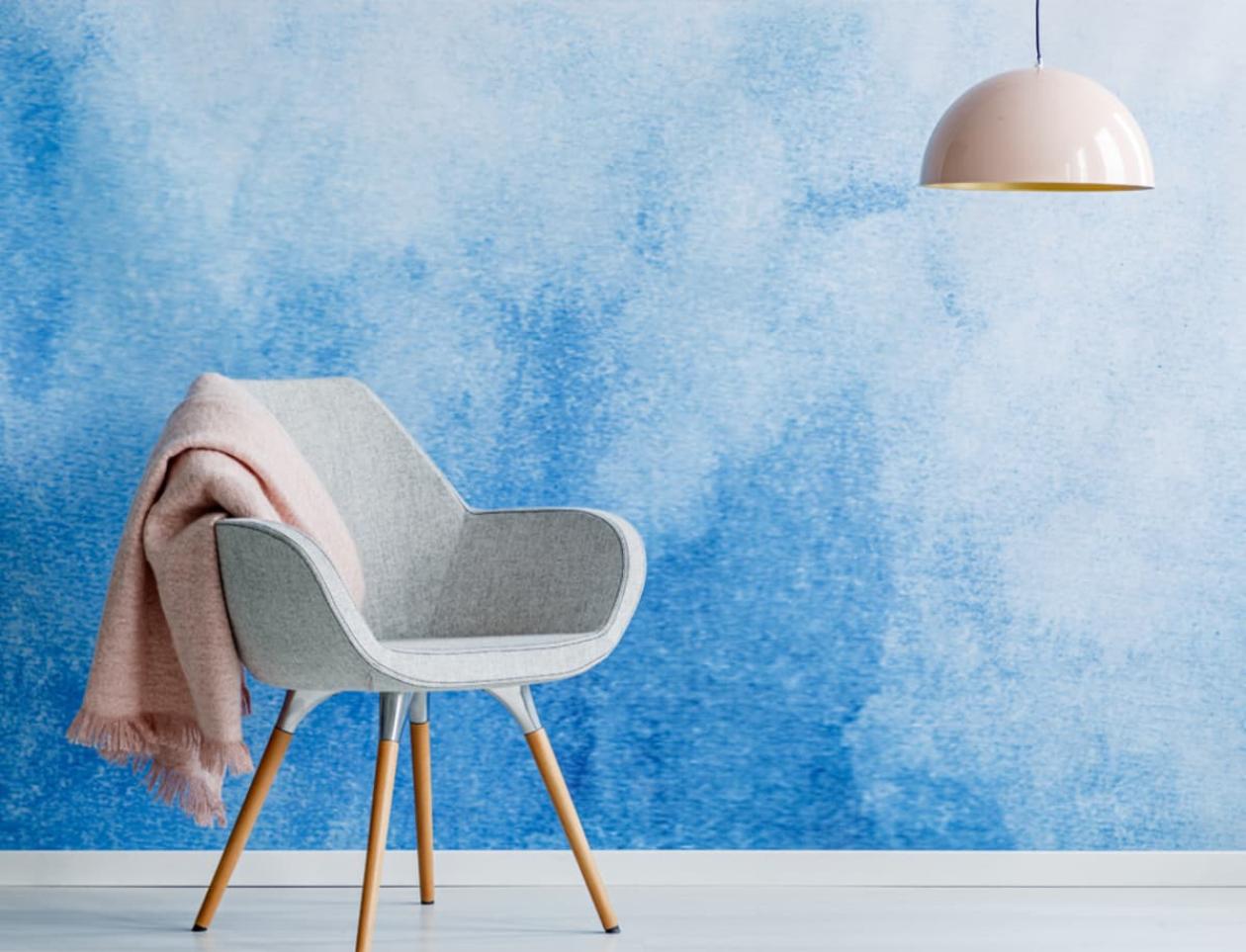
The word spugnato in Italian means “with a sponge.” This wall painting/decorating technique involves applying a second layer of paint with a sponge - usually with a dabbing motion - over a base coat, often in a lighter or contrasting shade. The result is not flat or uniform like a simple roller or brush; instead, it creates a soft, smooth texture with color gradations, depth, and visual “waves” in the finish.
The term dabbing refers to light pressing motions rather than continuous rubbing. The result is a wall with a “geographical,” slightly raised appearance and color variations that look different depending on the light and viewing angle. If you want to avoid monotone, flat walls, Spugnato gives a more lively and interesting look.
It is ideal for living rooms, especially on opposite walls (2 out of 4), and spaces where warmth is preferred over strictness. Since it can be done simply with paint and a sea sponge, it is extremely popular. For an eco-friendly result, KRAFT Paints’ Master Eco provides the perfect base, offering a healthy atmosphere and beautiful matte finish.
Rullato
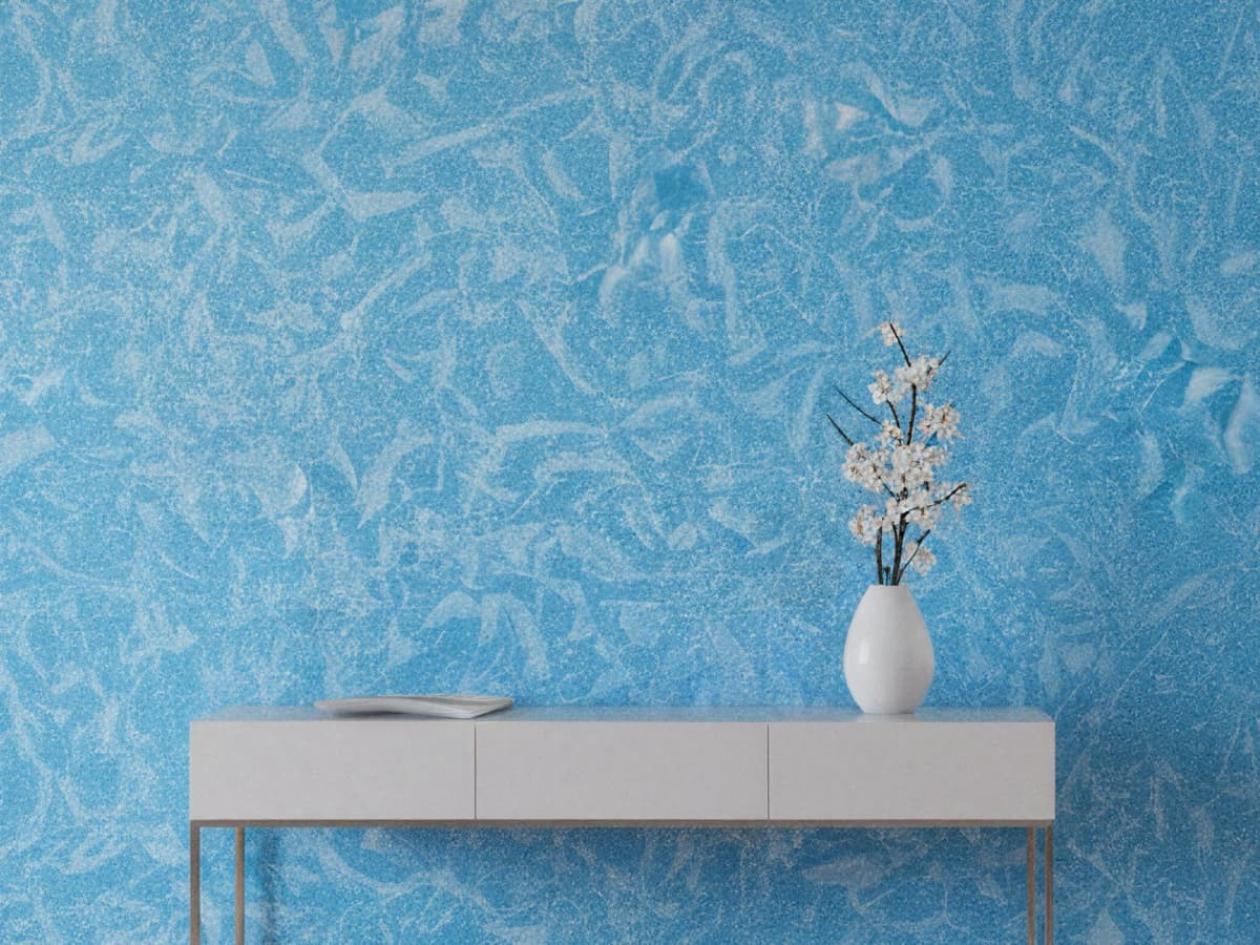
Rullato is also an Italian wall decorating technique, using a roller instead of a brush or sponge. It is essentially a family of techniques, influenced by the type of roller chosen. The outcome is a subtle textured pattern, reminiscent of fabric or delicate stripes, with either irregular or geometric motifs.
The final surface is not flat, but it does not have the pronounced relief of Spugnato. First, the wall is painted with a base color, then a second layer (usually slightly lighter or darker) is applied with a special roller. Circular or diagonal motions create the characteristic “wave” or fabric effect.
This technique gives a sophisticated texture and depth of color, is easy to apply over large surfaces, and is ideal for living rooms, hallways, and feature walls. Since textured surfaces can accumulate dust, using KRAFT Paints’ Master Easy Clean ensures that the wall can be cleaned easily, keeping the finish vibrant for years.
Plastic-bag technique
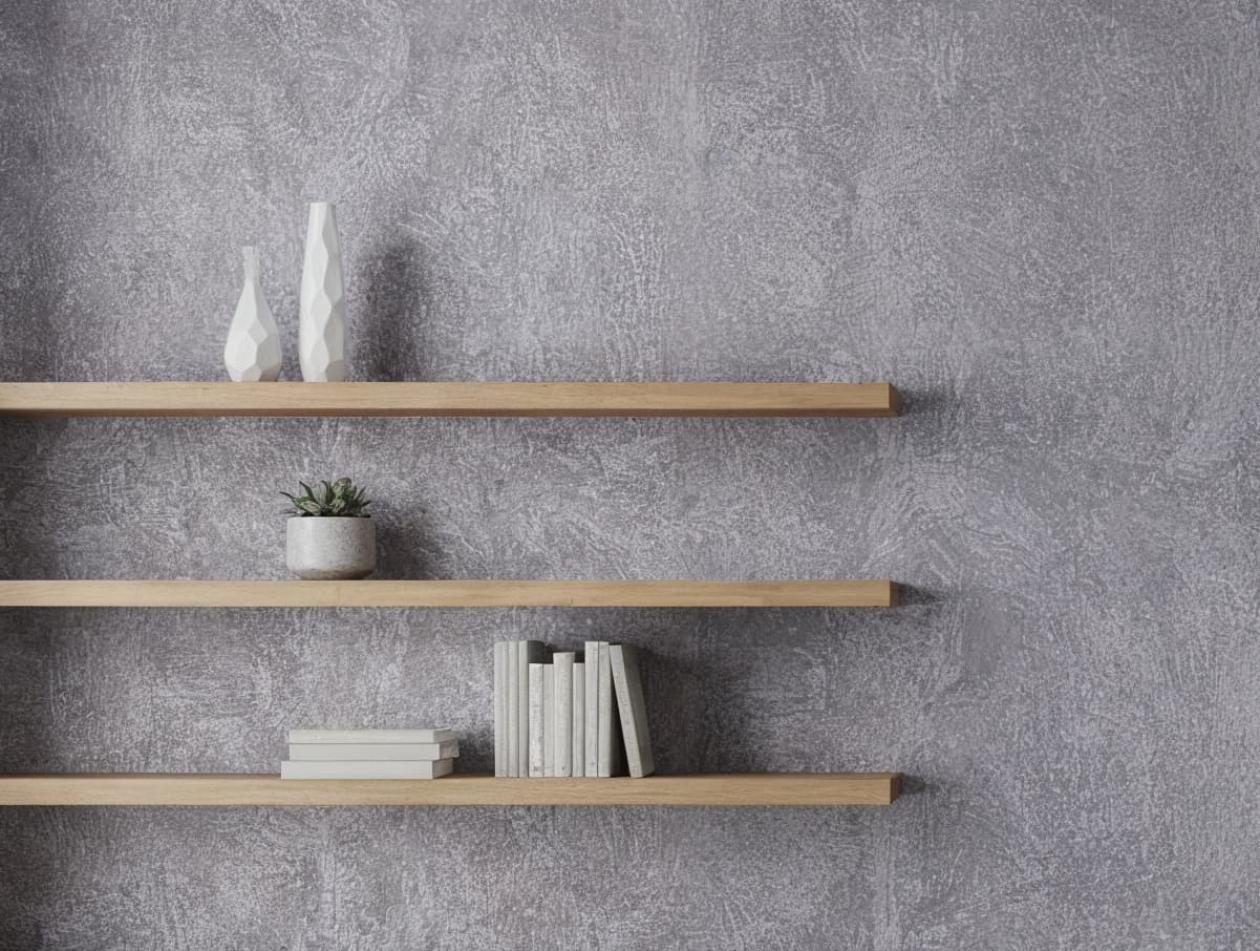
Similar to the previous technique, the plastic bag method adds texture and interest to a wall, creating an irregular two-tone effect.
This technique is especially recommended for spaces with vintage, rustic, or artisan atmosphere. The process begins with a base coat, usually a darker shade, and then the plastic bag is used—either on a stick, roller, or by hand.
First, seams and handles are removed from the bag (e.g., a single-color supermarket bag), then it is opened and applied with dabbing, using a second shade. Pressing or lightly dipping the bag in the paint and moving it in circular motions leaves behind a textured pattern with small irregular “creases” or “veins,” depending on pressure and paint quantity.
Microcement Style Technique
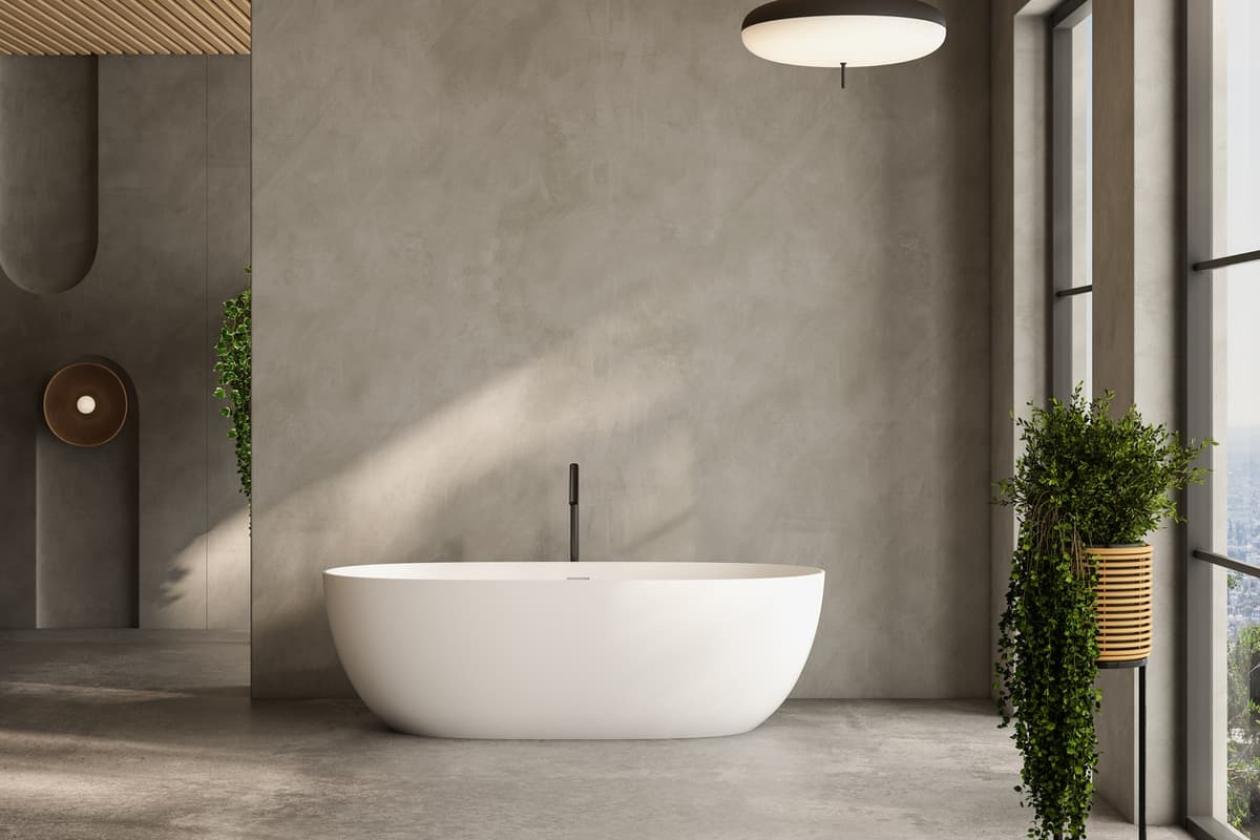
This technique creates a seamless, smooth surface without joints, producing a minimal and industrial look. The material is applied in successive layers with a flat metal or plastic trowel, where trowel strokes give the wall a smooth yet lively texture, characteristic of polished cement finishes.
For a result that combines high artistry with durability, KRAFT Paints recommends the Arterra Patiti system. This ready-to-use paste comes in two grain sizes, enhancing the wall’s aesthetic depth and turning it into a modern work of art. Using the full Arterra Patiti system (preparation, primers, protective varnishes) ensures unmatched visual results along with long-lasting durability.
Checkerboard
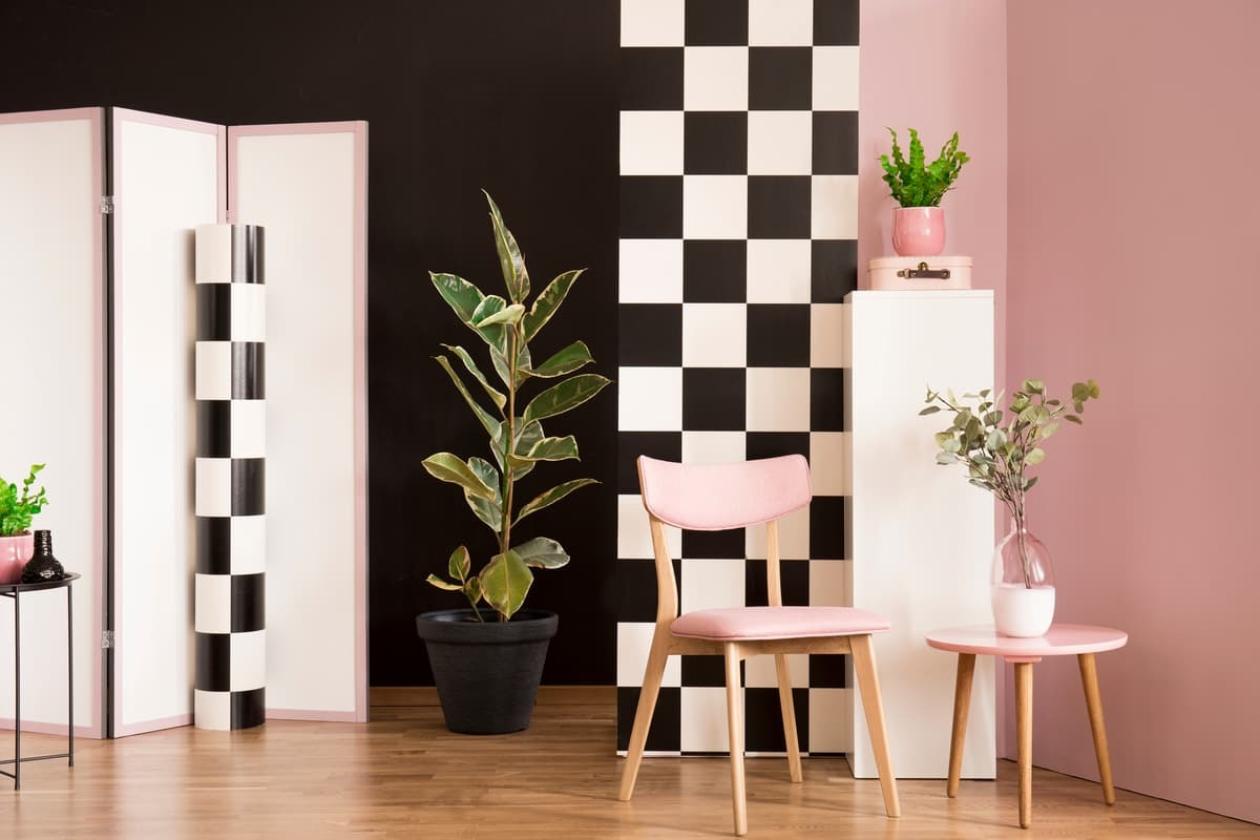
The checkerboard technique creates a geometric pattern of squares in contrasting colors. This design gives a space character, which can be minimal and modern, or more classic and Art Deco, depending on the color choice and finish.
The wall is first painted with the dominant color. Using measurements and masking tape, horizontal and vertical lines are marked to form the squares. Every second square is painted with a secondary color, creating the signature checkerboard pattern. The finish is usually slightly glossy, occasionally matte.
This technique adds visual interest and is ideal for kids’ rooms, kitchens, or feature walls, where geometric order with a playful twist is desired. KRAFT Paints’ Inspired Collection provides the perfect complementary shades to make your geometric design stand out with precision and style.
Harlequin
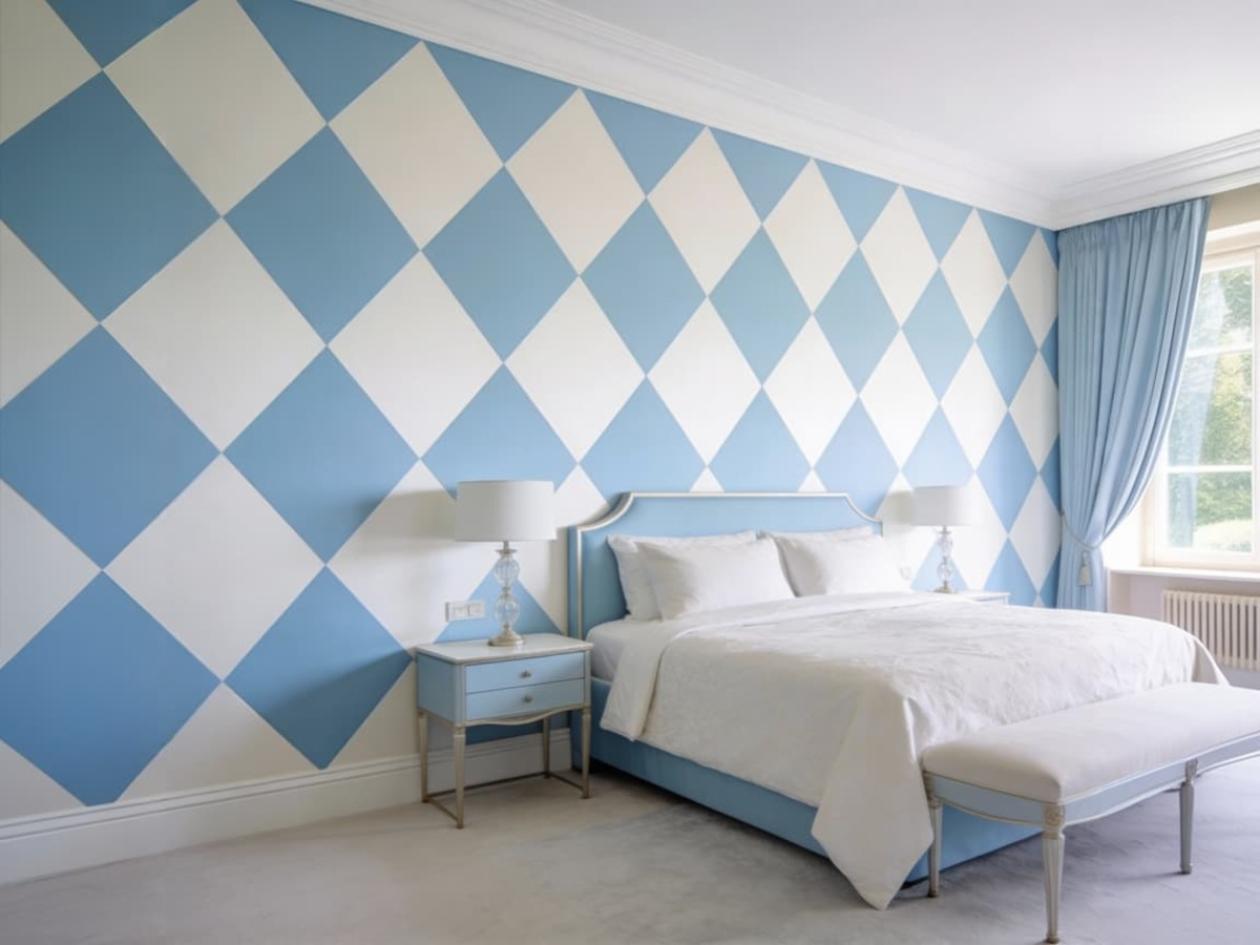
The Harlequin pattern features a repeating diamond motif, usually in contrasting colors, giving the space a strongly geometric aesthetic. It can be applied with paint or wallpaper. For painting, the wall is first coated in the primary color, then lines are marked for the diamonds, and every second diamond is painted in a contrasting shade. The result brings vibrancy, character, and dynamism, and can be used in living rooms, children’s rooms, kitchens, or feature walls. Pastel or neutral tones create an elegant, chic look, while bold colors express passion and energy.
Ombre
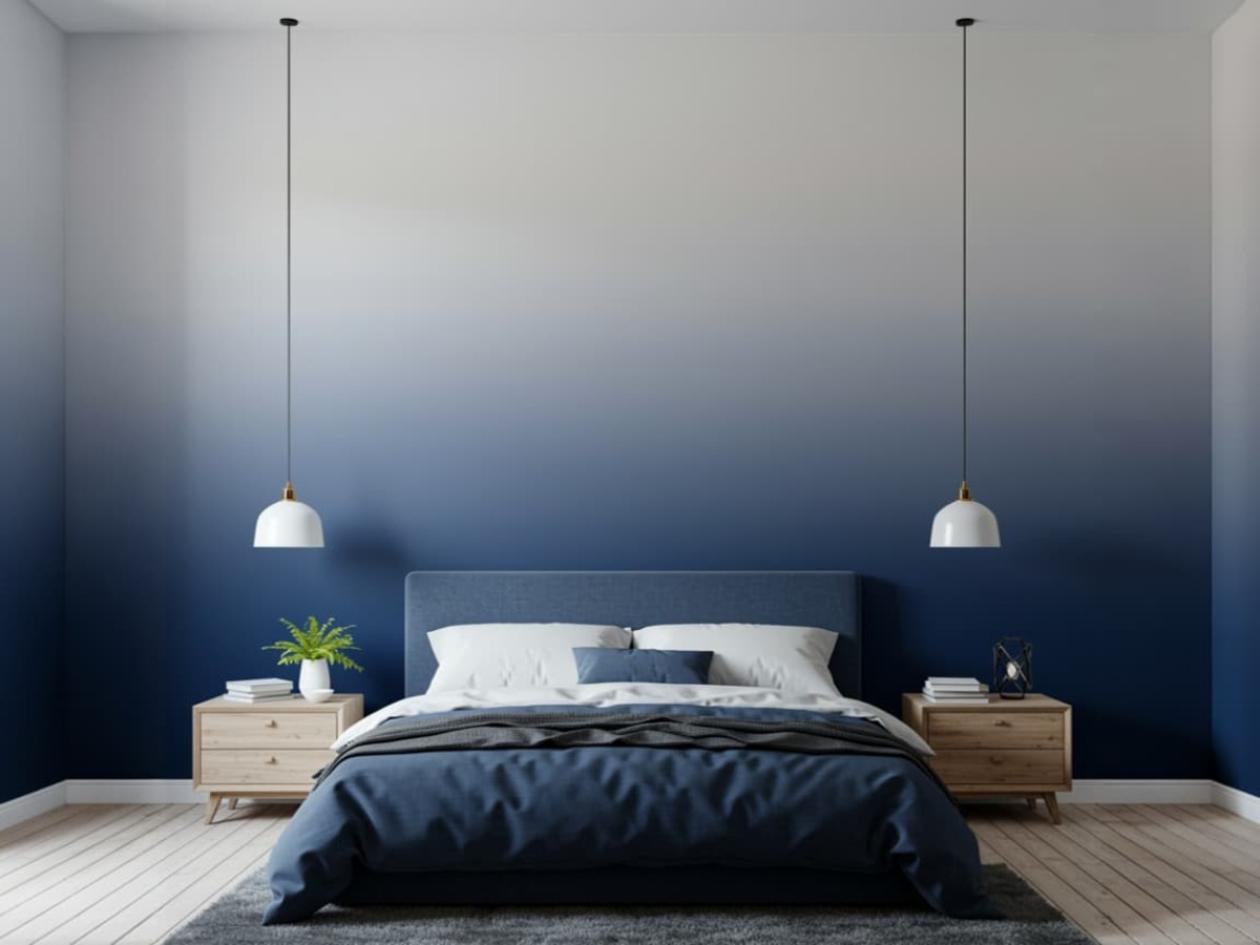
The Ombre wall technique is based on a smooth color gradient, where the wall transitions from a light shade to a darker one (or vice versa), creating visual flow and depth. In English, it is known as Ombre wall painting or gradient wall. The process begins by painting the entire wall with the lightest shade, after which one or two additional tones are added to create the transition.
Using a brush, roller, or sponge, the colors are carefully blended so that the change appears smooth and natural, without harsh lines. This is achieved as follows: the painting is done in zones - for example, the upper part in a light shade and the lower part in a darker shade - and in between, blending is performed to merge and soften the colors, ensuring a delicate, seamless transition.
The result gives the space a modern aesthetic and is ideal for bedrooms, where the appropriate choice of cool tones (e.g., blue, green, purple) creates a calming and relaxing atmosphere. Ombre also creates a visual sense of depth or height. For example, with a darker lower portion and a lighter upper portion, a small or low-ceilinged room can appear larger and taller.
There are dozens of other wall techniques, ranging from metallic finishes, hard brush effects, stencils, and graphic designs, to more complex decorative applications.
Keep exploring to gain inspiration and, if you are a painter or decorator, learn how to master every traditional and contemporary wall painting technique.
